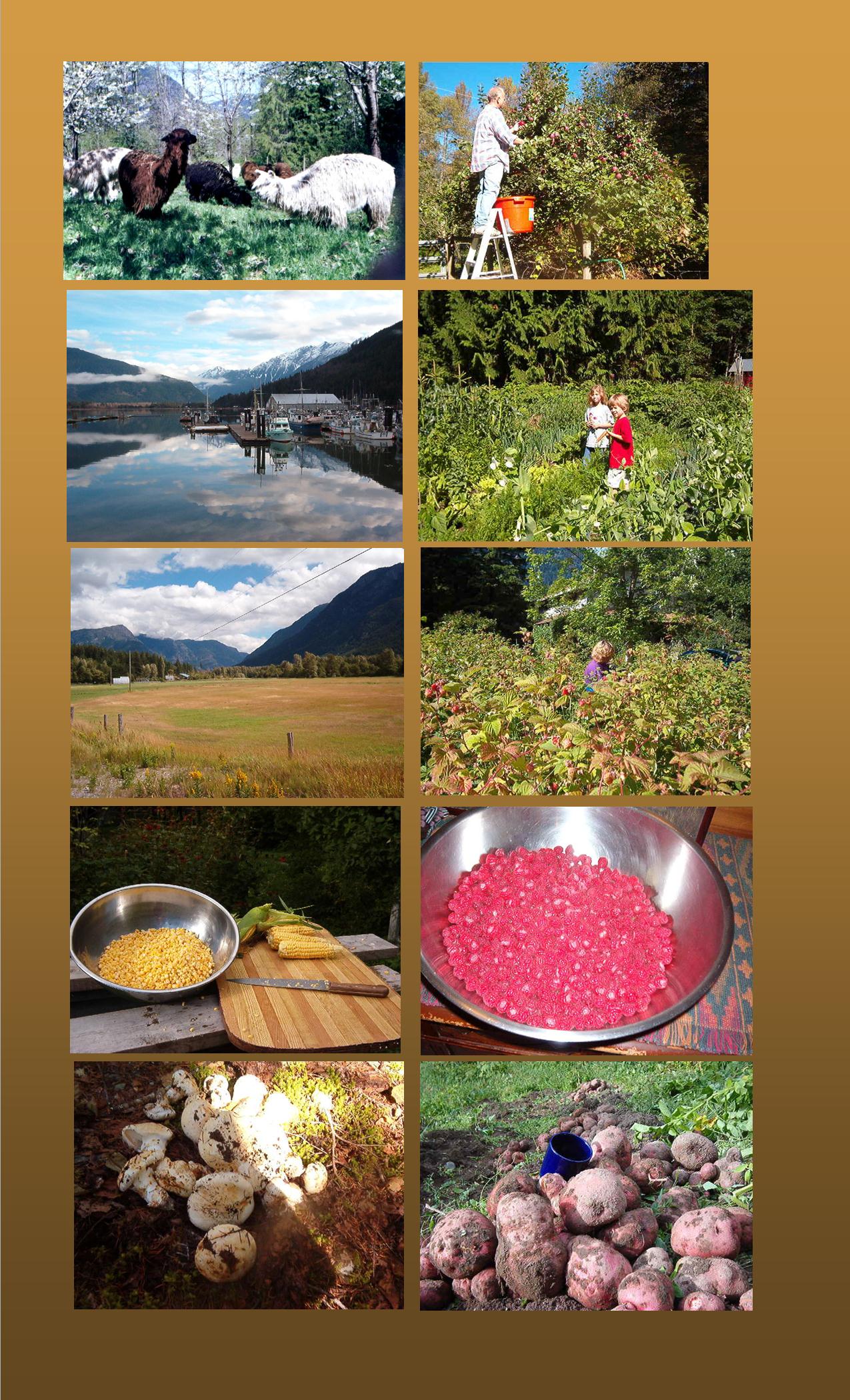
In the summer of 1979 I spent a month traveling the entire northwest coast of North America for a place to settle. I investigated Vancouver Island, caught the Ferry from Port Hardy to Prince Rupert. Then the Alaska Ferry to Skagway, continuing my southward journey via the interior route of Highway 97 and its harsh interior plateau. I made many stops on the way searching for that ideal environment to fit my criteria of mild weather, a real wilderness experience, a river, amenities and price. It was on my return that I remembered Bella Coola from a visit ten years before. In 1980 I immigrated to Canada and shortly thereafter bought my property here in the Bella Coola Valley. Of all the places I had previously visited this was the only arable land mass on the entire mainland west coast that offered the things I considered important.
The economy is a history of resource management with fishing and logging being the main sustenance. The location of the valley and consequential “cost to market” has recently caused some retraction of the local economy. The valley philosophy to new development is a “go slow” approach with environmental considerations paramount. The valley population varies around three thousand residents. The weather is typical of a transitional moist continental climate with coastal influence very similar to western Oregon and Washington. The Bella Coola Valley is a continuation of the North Bentinck Arm of the Burke Channel with the Open Ocean some sixty miles to the west. Most years the first real frost doesn't’t come until late November and it’s usually safe to plant after the first of May. Last year I had a flower still intact in December and I planted my corn this spring in April. The summer season here is not as hot as the interior but it is much warmer from autumn through spring. The rainfall averages from forty to sixty inches a year depending on your location in this sixty mile long valley. At Bella Coola the flora is reminiscent of a Coastal rain forest with moss laden Cedar and Spruce. In contrast the dryer easterly end of the valley blends into a Boreal Forest Climate and has many stands of Aspen. I even know of a spot where sagewort grows. A succulent more suited to the Olympic Peninsula.